
At the Edge of Consciousness: How Ketamine Changes Brain Criticality
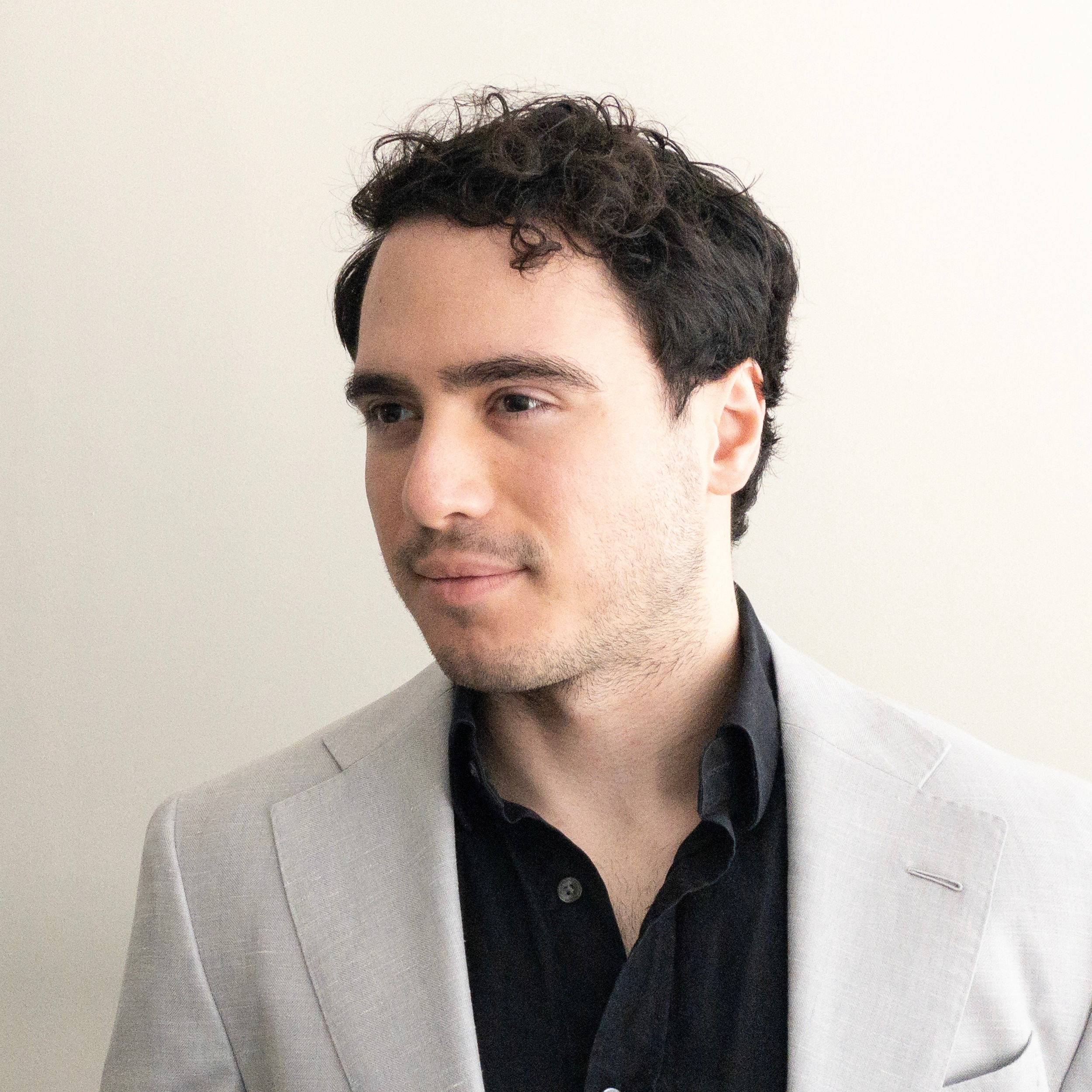
Diego Dávila was the lead author on this study. Dr. Dávila is currently an Entrepreneurial Fellow at Penn Health-Tech and Wharton, where he is leading the commercialization of early stage healthcare ventures.
or technically,
The Administration of Ketamine Is Associated with Dose-Dependent Stabilization of Cortical Dynamics in Humans
See Original Abstract on Pubmed
Authors of the study: Diego G. Dávila, Andrew McKinstry-Wu, Max B. Kelz, and Alex Proekt
Do you ever wonder how consciousness arises? In the field of neuropsychology, scientists have been trying to understand this question for over 100 years. Typically, when we talk about consciousness, we refer to a state of awareness of our internal experiences (e.g., thoughts and feelings) and the external world [1]. However, conscious experience does not only occur when interacting with the external world (e.g., when awake). It can also occur while dreaming, where a state of consciousness arises without interaction with the outside world.
Scientists have discovered that drugs like ketaminecan induce a “dream-like” state in which there is preserved internal experience (consciousness) alongside reduced responsiveness to the external world [2]. A conscious experience is believed to be characterized by a sudden, coordinated burst of neuronal activity[3].
Think of the brain like a sandpile in an hourglass. As grains of sand accumulate, most only cause tiny shifts, but occasionally a larger avalanche occurs. In this analogy, statistical criticality describes the overall distribution of these avalanches: small sand shifts are common, avalanches are rare, and the pattern follows a predictable relationship seen in critical systems. Operating near a state of criticality may enable efficient propagation of activity: we see a stop sign, a cascade of activity is triggered in our brain, and we know we should stop. In the hourglass, we can think about this as the occasional avalanche in the sea of tiny sand shifts.
In ketamine sedation, statistical criticality is preserved, contrary to traditional anesthetics, where there is a departure from statistical criticality. This preservation of statistical criticality might explain why there is a state of consciousness in ketamine-induced states, but it does not explain why there is a decrease in responsiveness to the external world. It is this idea that inspired the recent work of Dr. Diego Dávila, Neuroscience Graduate Group (NGG) alumnus, where he aimed to determine if a ketamine-induced state is associated with a departure from dynamical criticality in the brain. Dynamical criticality is related to the system’s evolution over time. If we go back to the hourglass analogy, instead of thinking: does a grain of sand trigger an avalanche or not, we will think of it in a more flexible way. Does the grain of sand trigger a sand shift that dies out quickly, does it create a shift that spreads just enough to reorganize the pile, or does it cause an uncontrollable shift in the sand pile? If a system departs from dynamical criticality, it can either be very stable, where inputs fail to trigger a cascade of neuronal activity, or unstable, where even small inputs will cause a big cascade of neuronal activity.
In his work, Dr. Dávila analyzed human electroencephalogram (EEG) data, which allowed him to measure brain electrical activity using electrodes that are placed on the scalp. EEG data were collected during increasing doses of ketamine to examine how different doses of ketamine affect dynamical criticality. He performed stability analysis, which assumes that over a short period of time, brain activity behaves like a linear system, allowing the model to predict how activity at one moment influences activity at the next. Using this approach, Dr. Dávila assessed whether the observed brain dynamics were stable, unstable, or at dynamical criticality. As hypothesized, he found that during the administration of ketamine, brain dynamics became more stable and therefore moved away from dynamical criticality, whereas before ketamine administration, the brain dynamics were near dynamical criticality.
Dr. Dávila found that during wakefulness, the brain operates near dynamical criticality; however, ketamine administration shifts brain dynamics away from criticality toward a more stable state. This shift from dynamical criticality to stability is dose-dependent, with higher doses moving the brain closer to stability and closely tracking the loss of responsiveness as ketamine doses increase. This last point is particularly important because it suggests that measuring dynamical criticality through EEG could allow clinicians to monitor real-time loss of responsiveness as anesthetics are administered, as well as the regaining of consciousness as anesthesia begins to wear off. Being able to track the loss of responsiveness and regaining of consciousness would help ensure patients are neither under- nor over-anesthetized. Additionally, it could potentially facilitate tailoring drug doses to individual patients, ensuring safety while minimizing unnecessary drug exposure.

About the brief writer: Astrid Ramos-Rolón
Astrid is a PhD candidate in Dr. Corinde Wiers' lab. Her research focuses on the neuroimaging markers related smokers' increased susceptibility to developing Alzheimer’s Disease.
Citations:
[1] Cavanna AE, Shah S, Eddy CM, Williams A, Rickards H. Consciousness: a neurological perspective. Behav Neurol. 2011;24(1):107-16. doi: https://doi.org/10.3233/BEN-2011-0322
[2] Sarasso S, Boly M, Napolitani M, Gosseries O, Charland-Verville V, Casarotto S, et al. Consciousness and Complexity during Unresponsiveness Induced by Propofol, Xenon, and Ketamine. Current Biology. 2015;25(23):3099-105. doi: https://doi.org/10.1016/j.cub.2015.10.014
[3] Mashour GA, Roelfsema P, Changeux J-P, Dehaene S. Conscious Processing and the Global Neuronal Workspace Hypothesis. Neuron. 2020;105(5):776-98. doi: https://doi.org/10.1016/j.neuron.2020.01.026